


Problem: inconsistent product quality under production stress
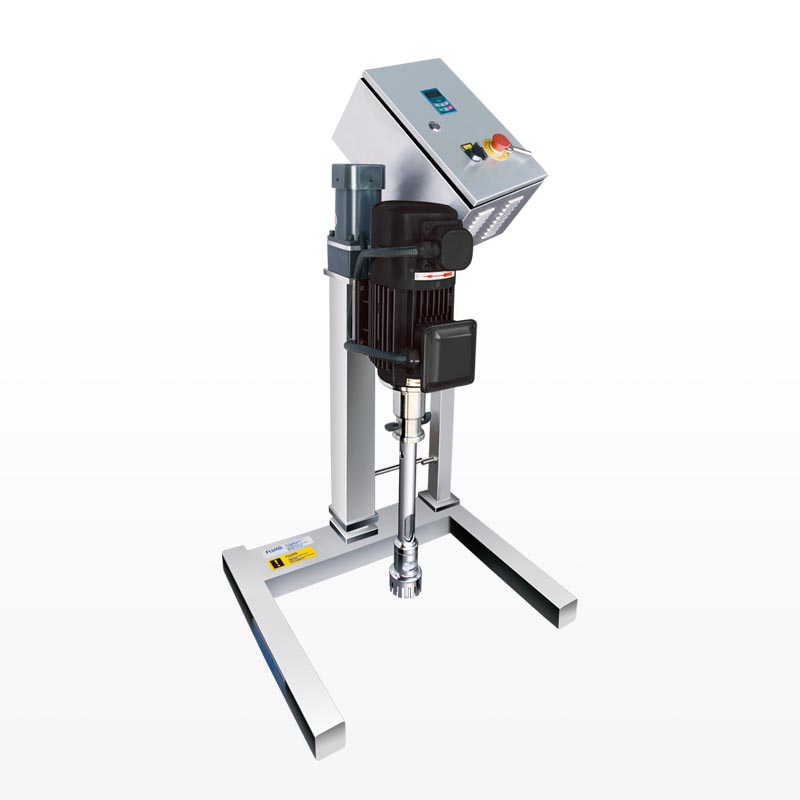
Manufacturers face the same blunt problem: a recipe that works in small trials often yields uneven emulsions, variable particle size, or long processing times on the line. That mismatch costs time and raw material. A well-configured Laboratory mixer helps R&D reproduce process shear and catch those problems early, but many teams still see surprises when scaling up.
Why this matters for operations and R&D
Poor homogenization shows up as separation, stability failures, or inconsistent texture. Operations lose throughput; quality teams chase root causes. R&D loses confidence in lab-to-plant correlations. Fixing equipment or recipes after full-scale runs is costly and risks missed delivery windows.
Where high-shear mixer manufacturers add real value
Manufacturers translate physics into usable equipment: they tune rotor-stator geometry, provide variable tip speeds, and recommend seals and drives that match a product’s shear sensitivity. Good suppliers also document test curves and help validate scale-up ratios. That guidance turns uncertain lab data into repeatable plant recipes.
Technical considerations when choosing a maker
Match specifications to the problem. Ask for measured tip-speed ranges, specific energy (kWh/m3) data, and results on similar formulations. Confirm maintenance access, seal types, and CIP compatibility. Prioritise units that allow controlled shear adjustments rather than fixed-speed designs. Measure results by particle-size distribution and process time, not by claimed horsepower alone.
Common pitfalls and how to avoid them
Teams often expect linear scaling: they increase motor size and assume the same dispersion will follow. It does not. Over-shearing fragile APIs causes degradation; under-shearing leaves large droplets. Avoid specifying a mixer purely on material of construction or price. Instead, demand lab-to-pilot trials and documented performance on representative formulations.

Alternatives to consider briefly
If high-shear inline units do not suit a product, rotor-stator bench units, ultrasonic homogenizers, or high-pressure homogenizers may work better. Each alternative shifts the failure modes: ultrasonics excel at nano-emulsions but can heat the mix; high-pressure units give narrow distributions but need more complex piping. Balance process goals against maintenance and energy budgets.
Experience and a single real-world anchor
Drawing on hands-on advisory work with plant and lab teams, I’ve seen how a focused bench trial prevents costly rework. In pharmaceutical practice around Basel, Switzerland, teams routinely validate scale-up paths by starting with a benchtop inline mixer and recording shear-energy metrics that guide manufacturing settings. That local practice—well documented in technical reports from industry conferences—makes lab data actionable for production.
Conclusion: make equipment choice a risk-management decision
Treat mixer selection as risk control: define the problem, require measured performance on representative mixes, and choose a manufacturer that shares test data and scale-up guidance. Do that and you reduce surprises, cut trial time, and protect product quality—outcomes the engineering team expects when they specify reliable equipment from FLUKO.
