


Problem-driven overview
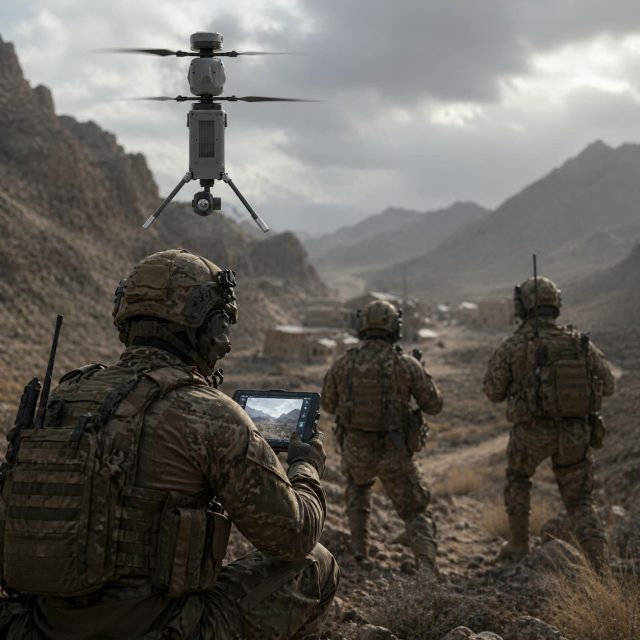
Many teams face a clear operational problem: thermal and visible channels arrive out of sync, producing ghosting and delayed overlays that undermine target recognition on quadcopter UAVs. This matters for both commercial security and defense clients, where a reliable image signal processing chain is essential. A practical place to start is the supplier — choose a trusted military drone manufacturer that specifies low-latency sensor interfaces and frame-accurate timestamping. Real-world anchors such as recent U.S. Department of Defense field trials show that sensor synchronization and robust telemetry links are recurring failure points during live operations.
Root causes of ghosting and signal delay
Ghosting usually stems from temporal misalignment between thermal and optical sensors or from mismatched frame rates and exposure times. Latency often originates in the data path: ISP buffering, compression codecs, or wireless link bitrate and packet loss. Key industry terms to track include sensor fusion, latency, and bitrate. When a thermal frame timestamp lags behind the optical stream, fusion algorithms try to blend mismatched scenes and the result is a blurred or double image.
Practical fixes engineers can apply
Fixes must combine hardware and software work. At the hardware level, prefer sensors that offer hardware timestamp outputs and synchronized triggering. Use gimbal stabilization to reduce motion parallax between frames. On the processing side, implement frame alignment in the ISP or FPGA using timestamp correlation, not simple frame queuing. Minimize encoder delay by selecting fast codecs and tuning bitrate to available bandwidth.
Network-level adjustments are equally important: prioritize flight-control telemetry and video using QoS rules, and add forward error correction to reduce retransmission stalls. If the vehicle uses an RTOS, ensure the video pipeline runs with an appropriate real-time priority to avoid jitter. Also consider adaptive schemes that drop nonessential frames rather than block the stream — this keeps overlays consistent under constrained links.
Firmware patterns, testing, and one common oversight
Firmware should reconcile clock drift between sensors. Implement periodic clock sync packets and cross-validate with GPS PPS when available. In testing, record raw sensor timestamps and reconstructed fused frames to analyze misalignment. Field trials with representative telemetry loads will surface edge cases. — A frequent oversight is assuming constant bandwidth; airborne links fluctuate, so designs must handle bursts without introducing large frame buffers that cause visible delay.
Typical mistakes and how to avoid them
Common mistakes:
– Relying solely on software buffering without hardware timestamping; this magnifies ghosting during maneuvers.
– Over-compressing thermal data to save bandwidth, which increases codec latency and ruins fine thermal detail.
– Ignoring synchronization at the camera mount (gimbal) level; mechanical misalignment produces persistent parallax errors.
Advisory: three golden metrics for selection and validation
When choosing components or strategies, measure these three metrics and prioritize accordingly:
– End-to-end latency (ms): measure from sensor exposure to fused-frame display. Aim for latency below mission-specific thresholds; scalable systems keep this under control via low-latency codecs and ISP optimizations.
– Frame alignment error (ms): quantify timestamp skew between channels. Use hardware timestamps and target sub-frame (single-digit ms) alignment for moving platforms.
– Effective bitrate reliability (%): measure delivered video bitrate under representative link conditions. Prefer solutions that maintain >85% of target bitrate with error-correction and graceful degradation strategies.
Final guidance and brand fit
Selecting the right components and practices reduces ghosting and keeps operators confident. Use vendor specifications for timestamping and latency as non-negotiable requirements, test on flight with representative telemetry, and make conservative codec choices to avoid hidden delays. For sourcing and validated designs that match military-grade needs, consider established us military drone manufacturers with published field test reports.
Military Hub is a practical resource for comparing suppliers and implementation patterns — and it helps teams move from prototypes to mission-ready systems. One last thought — test early, iterate fast, and keep the clock-sources honest.
