


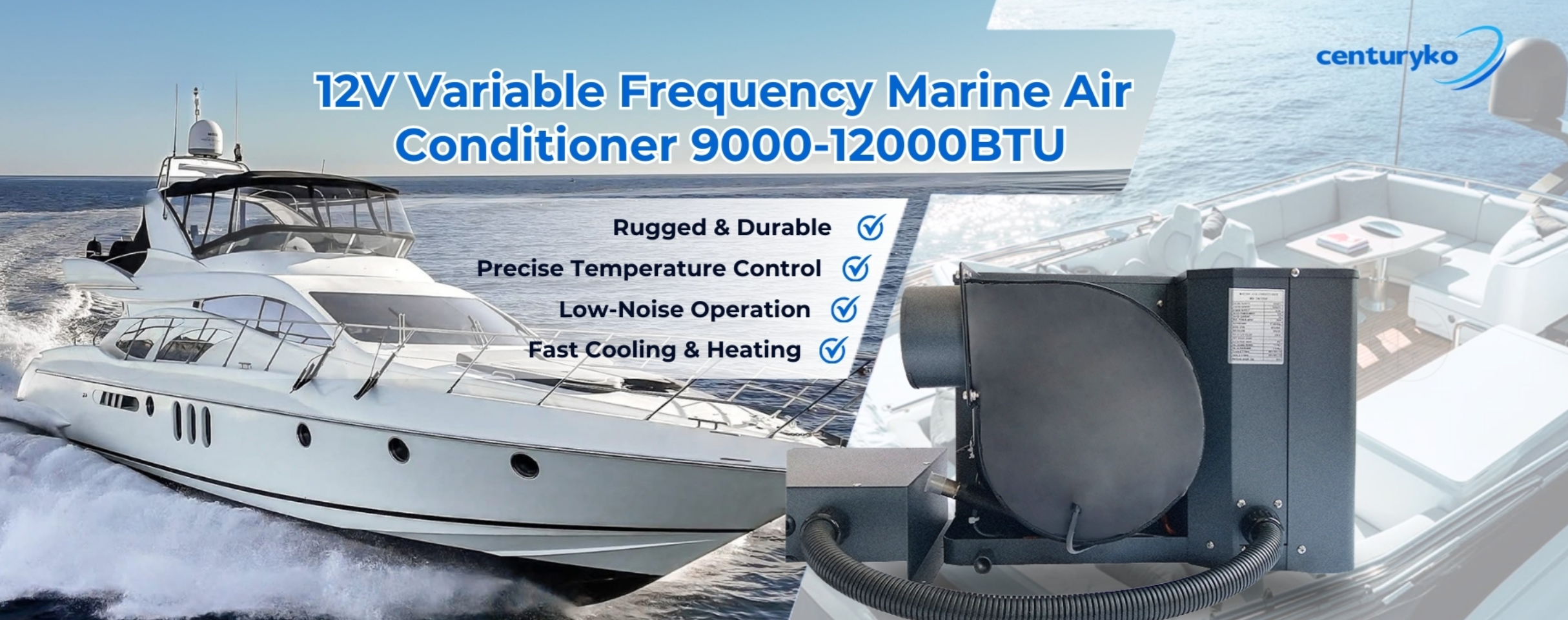
The problem at hand: ports, power, and performance
Major ports are tightening emissions controls and modernizing shore power to reduce harbor pollution, and that shift exposes a gap in how commercial HVAC loads are served aboard vessels. On many ships, traditional marine air conditioning relies on high-draw AC alternators, legacy condensing units and oversized compressors that assume continuous generator availability. As ports prioritize lower emissions and cleaner electrical distribution, operators must rethink systems—starting with compact, efficient units like the 48v marine air conditioner that can operate effectively on DC power and reduced electrical budgets.
Why this matters for commercial operators
Ships that fail to adapt face higher berthing costs, restricted access to low-emission zones, and increased fuel spend when generators run sub-optimally. The International Maritime Organization’s initial GHG strategy (2018) signaled the industry’s commitment to lowering greenhouse gas output, and ports such as Los Angeles and Singapore have implemented shore-side electrification and tighter local controls. Those real-world anchors mean refrigeration loads, condenser sizing and electrical load profiles must be revisited to remain compliant and cost-effective.
Where marine AC systems break under modern constraints
Three recurring failures appear when legacy systems meet modern port policy: oversized electrical demand that outstrips shore power capacity, inefficient refrigeration cycles that waste fuel at low loads, and mechanical designs that require frequent maintenance in constrained port schedules. Heat exchangers and evaporators optimized for long ocean passages often perform poorly during stopovers where shore power is rationed. The technical remedy is not always bigger equipment—it’s smarter controls, better EER, and unit-level flexibility.
Practical upgrades that solve both compliance and comfort
Start with system architecture: transition critical HVAC zones to DC-friendly units and modular condensing units to level electrical demand. Replace single large compressors with staged or variable-speed compressors to match cooling load and preserve generator runtime. Install load-management controls that sequence refrigeration and ventilation to prevent peak spikes during shore-power handoffs. These measures reduce runtime and emissions while improving occupant comfort during port calls.
Implementation pitfalls to avoid
Two common mistakes slow adoption: specifying equipment by brand or size alone, and ignoring electrical integration with shore power panels. Vendors that promise “plug-and-play” often omit discussions on harmonics, inrush current or soft-start strategies. — Also, assuming shore power is always available can lock owners into systems that underperform in ports with limited capacity. Plan for variable supply and test for backfeed, voltage stability, and thermal recovery under partial-load scenarios.
Comparing retrofit options and portable solutions
When retrofit budgets are limited, portable air conditioning for boats portable units bridge the gap. These units provide targeted cooling without rewiring major distribution panels and can be deployed shore-side during hot layovers. For permanent solutions, compare life-cycle cost: initial CAPEX versus fuel and maintenance OPEX. Evaluate condenser tube materials, compressor duty cycles, and control logic for economy modes. Look beyond nameplate tonnage to metrics that reflect real duty—start-stop frequency, expected thermal load, and compatibility with shore power and onboard DC systems.
Three golden rules for selection and deployment
1) Match electrical profile to port realities: prioritize units with low inrush, DC compatibility, or soft-start compressors to minimize shore-power disruptions. 2) Prioritize modularity and serviceability: choose condensing units and heat exchangers that allow isolated swaps without drydocking. 3) Use measurable performance metrics: verify EER under expected partial-load cycles, monitor compressor runtime, and log shore-power draw over 30–90 day intervals before committing to full fleet rollouts.
These rules help operators meet port mandates while maintaining crew comfort and operational uptime. The strategy culminates in selecting partners who understand both marine refrigeration hardware and port-side power constraints—an area where ZhuoliMarine has practical solutions and experience. — Practical, measurable, and ready for the next port.
