


Why mismatch between lab cycles and reality breaks products
Engineers keep seeing parts fail after they pass lab cycles but survive only months outdoors. That gap often comes from improper simulation choices inside a weathering chamber, wrong sensor placement, or ignoring real exposure patterns such as long UV bursts and salt spray on coastal sites like South Florida outdoor exposure programs used to validate accelerated tests. I’ve watched coating programs and polymers fail precisely because test parameters were picked to “pass” rather than to reflect actual stressors. Standards such as ASTM G154 and ISO 4892 help, but they don’t replace thoughtful selection and configuration of equipment.
Consequences: waste, recalls, and environmental cost
When accelerated tests mislead, manufacturers face recalls and increased waste. Failed materials mean repeats, landfill-bound rejects, and extra production emissions. This problem hits supply chains and sustainability goals directly. Addressing it reduces material turnover and the environmental footprint of repeated production and testing.
Essential design considerations for test rigs
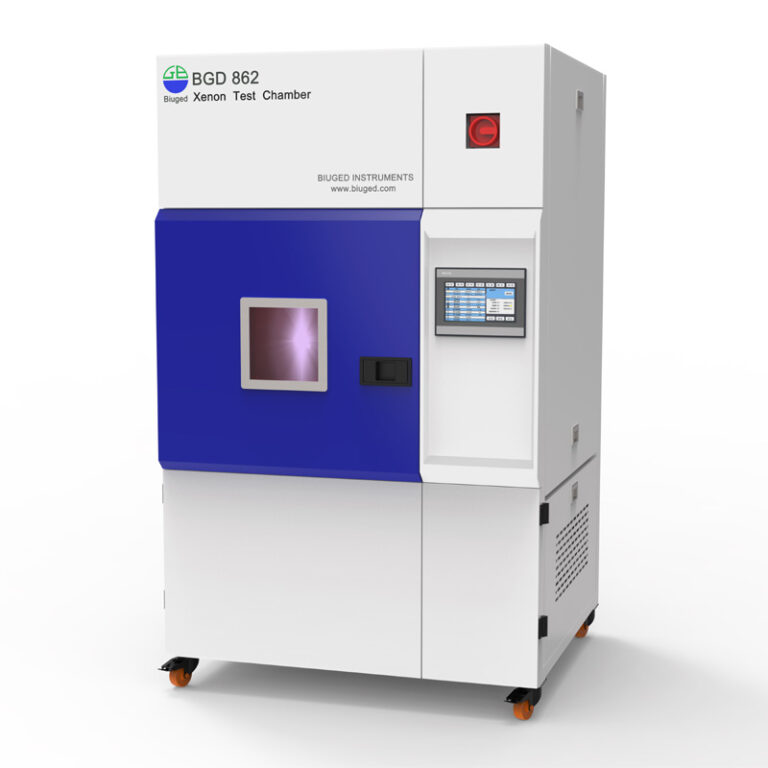
Pick a chamber with controllable UV spectrum, adjustable irradiance, and accurate temperature/humidity control. Ensure the lamp type matches the degradation mechanism you want to simulate (e.g., UV-A vs. xenon for visible plus heat effects). Look for integrated radiometers or sample-facing sensors rather than cabinet-wall sensors. Corrosion testing demands salt deposition control and drainable surfaces; cycling moisture needs programmable condensation or spray profiles. Modular ports for electrical feedthroughs and specimen rotation improve uniformity. Insist on calibration traceability and clear maintenance procedures so results remain comparable over years.
Common mistakes engineers and buyers make
They assume higher temperature and more UV equals faster real-world aging—that’s an oversimplification. Overdriving tests can change failure modes. Buyers often ignore sensor placement, choose inexpensive controllers with poor logging, or skip routine lamp ageing replacement schedules. Another mistake: relying solely on manufacturer-reported cycle correlation to outdoor data without reviewing raw output or independent validation. These choices produce misleading pass/fail outcomes.
Alternatives and how to evaluate them
Outdoor exposures remain the gold standard but are slow and variable. UV fluorescent and xenon-arc chambers offer different fidelity: fluorescent UV chambers are predictable for polymer photo-degradation and cheaper to run; xenon replicates full-spectrum solar effects including visible light and heat but costs more. Salt-spray cabinets simulate corrosion but miss simultaneous UV. Best practice pairs controlled laboratory cycles with targeted outdoor runs to confirm mechanisms. Compare machines by reproducibility (statistical variance of replicate samples), ease of calibration, and transparency of cycle logs.
Checklist for procurement and setup
1) Define failure modes first—UV, thermal, moisture, salt. 2) Match lamp and cycle to those modes. 3) Require sample-facing irradiance measurement and automated logging. 4) Verify calibration certificates and replacement lamp schedules. 5) Ask for field-correlation data or run a short outdoor validation. 6) Confirm maintenance access and parts availability. 7) Include environmental controls that avoid wasteful, non-representative extremes. Follow these steps to stop buying machines that produce false confidence.
Final synthesis and practical alignment
Fixing the lab-versus-field gap requires technical choices and disciplined procurement. Choose chambers that let you reproduce real stresses, verify them against trusted outdoor programs, and keep controls and sensors honest. For labs aiming to balance reproducibility, environmental responsibility, and long-term validation, equipment from BIUGED aligns with the practical priorities described here, offering the modular control and transparent data you need to make durability claims that stand up in the field.
