


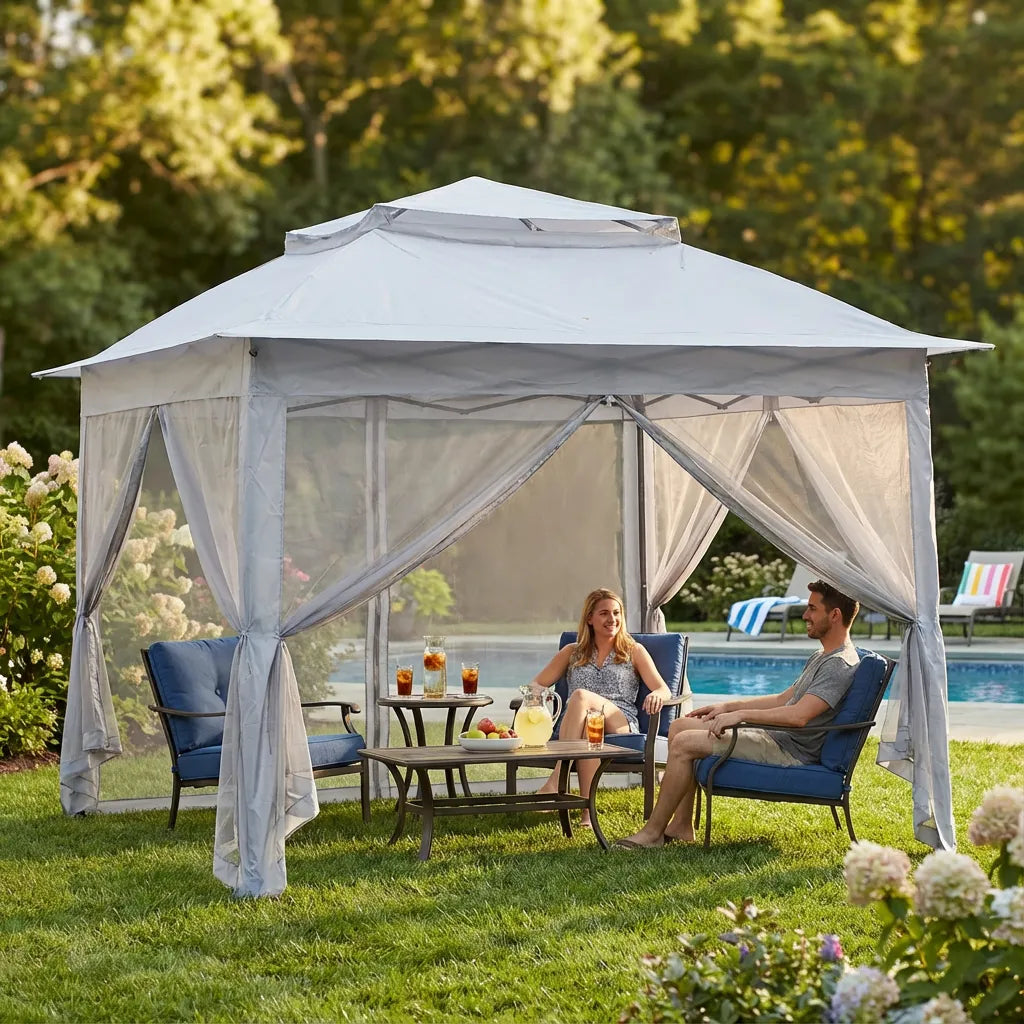
A closer look at Sunjoy Pop-Up Gazebos through the lens of shade needs for travel or events for off season storage
For vehicle owners planning covered parking, SUNJOY pop-up gazebos are best assessed as movable shade options rather than assumed vehicle shelters. Start with the space, the event or travel routine, and the way you expect to store the unit between uses. The right choice depends on how those needs align with the selected model’s stated details.

Define the space before comparing products
Begin with the area where the gazebo would stand. Measure the available footprint, note nearby walls or parked vehicles, and consider how people or equipment will move around it. A compact space may favor a flexible setup, while a regular event area may justify a different approach. These are planning questions, not claims about any specific model.
Vehicle owners should separate three goals that can sound similar. One goal is shade for people beside a vehicle. Another is a temporary area for an event or travel stop. A third is covered parking itself. A pop-up gazebo may fit the first two planning scenarios, but the selected product page should establish whether its stated size and intended use match the third.
Use the details the collection actually presents
SUNJOY describes its pop-up gazebo options as portable and discusses setup, packability, storage, and use for events or travel. Those details are useful because they connect the product category to temporary use. They also give you a practical review order: examine how the model is set up, how it can be packed, where it can be stored, and whether its listed use suits your plan.
The collection also presents different shopping scenarios. Backyard entertaining, camping or travel, and bug-prone settings are discussed as separate reasons to select one type of pop-up gazebo over another. Treat those scenarios as starting points. They help clarify the purpose of the shelter, but they should not be treated as a promise that every model serves every setting.
Compare flexibility with permanence
The page compares pop-up and permanent gazebos through flexibility, installation, cost framing, and intended use. That comparison gives vehicle owners a useful decision framework. If the shelter must move between events or travel destinations, flexibility and packability deserve close attention. If the goal is a fixed outdoor structure, installation and long-term placement become more central.
A portable gazebo can therefore make sense when your shade requirement changes by season, destination, or event. It may be less suitable when you want one permanent structure to define a fixed parking or gathering area. Do not turn that trade-off into a general quality judgment. It is a question of matching the product type to the job.
Check the selected model before buying
Once you know the use case, review the individual listing rather than relying only on the category label. Confirm the stated dimensions against the available space. Check the listed setup and storage information. Review any stated use scenario that relates to your plans. If the gazebo will sit near a vehicle, also consider clearance, access, and whether the planned position leaves enough room for normal movement.
Storage deserves equal weight. A model that fits the outdoor area may still be inconvenient if its packed form does not suit the available storage space. Plan where it will go during the off season, how it will be moved to that location, and whether the route includes stairs, narrow doors, or other practical limits. These checks concern your site and routine; they do not add features to the product listing.
For a camping or travel scenario, portability and packability become especially relevant because the shelter is part of a changing setup. For backyard entertaining, the surrounding space and intended gathering pattern matter more. For a bug-prone setting, look for the model details that address that scenario. Use each situation as a shopping lens, not as evidence that all options have the same configuration.
| Planning lens | Page-supported focus | Question for the shopper |
|---|---|---|
| Temporary movement | Portability, setup, packability, and storage | Will the selected model fit the way you move and store it? |
| Activity or setting | Backyard entertaining, camping or travel, and bug-prone settings | Which scenario most closely matches the planned use? |
| Structure type | Flexibility, installation, cost framing, and intended use | Does a pop-up format fit better than a permanent gazebo for this plan? |
A simple way to narrow the choice
Compare the options in this order: intended use, placement, setup routine, storage plan, and model-specific details. This sequence keeps a broad category decision from becoming a guess based on appearance alone. It also makes it easier to explain why one option fits a temporary shade need while another may better suit a fixed outdoor plan.
Before placing an order, write down the space you have, the activity you expect to support, and the time of year when storage matters most. Then match those notes to the selected model’s stated information. A clear fit is more useful than assuming that a portable design automatically provides covered parking or that every pop-up option has identical features.
In practical terms, choose the product type that fits your movement and storage needs, then confirm the selected model against your space and intended use. That framework keeps the decision grounded in page-listed information while leaving room for your actual routine. Used this way, SUNJOY becomes a starting point for a careful comparison, not a substitute for checking the model that will occupy your site.
