

Request for Quote: What to Include for Small Kitchen Sinks
Why RFQs for small sinks go wrong
Vague RFQs get wrong parts and wasted time. I get requests that say “small sink” or “send options” and nothing else. If you mean a round kitchen sink, say so and give the rest: diameter, bowl depth, mounting type, and any required cutout. Clear specs stop back-and-forth and prevent late surprises.

Core technical details every RFQ must state
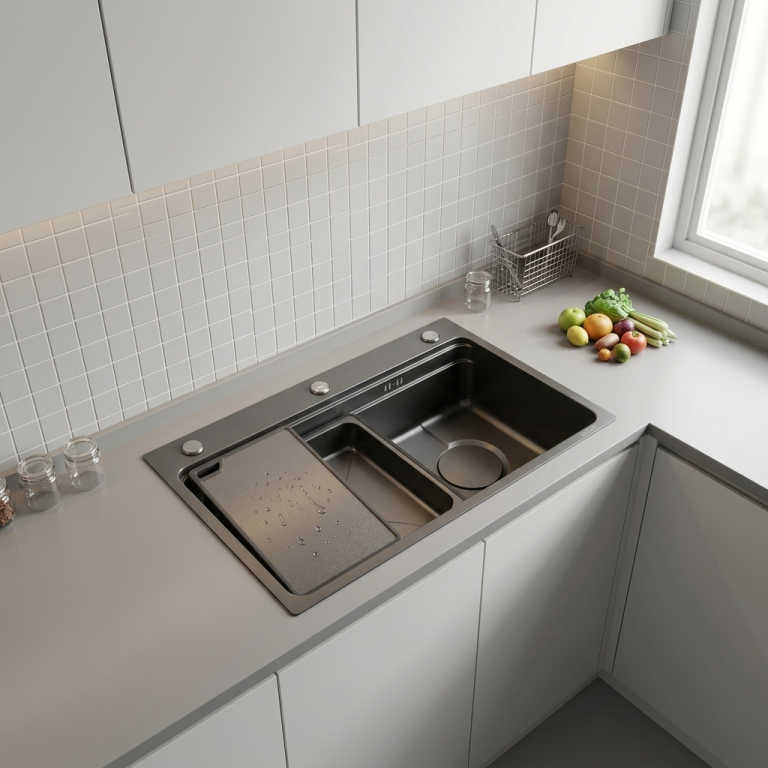
State these points precisely: exact outer dimensions (width x length x depth); bowl dimensions and corner radius; sink thickness (gauge for stainless steel); mounting type (undermount, drop-in, flush); required edge/profile (lip size or flush edge); faucet hole count and positions; drain size and location; overflow inclusion; compatibility with disposal units; finish (brushed, satin, mirror); and whether sound-deadening or undercoating is required. If you need accessories — strainers, grids, cutting boards — list model or spec numbers.
Measurements and tolerances to include
Give a template or CAD file when possible. Call out cutout dimensions and tolerances (e.g., +0/-1 mm), critical hole coordinates to ±1 mm, and acceptable bowl depth ±2 mm. Note max countertop thickness and mounting clearance. If you can’t supply CAD, provide a clear top view and side profile with dimensions marked.
Material, finish and performance requirements
Specify material grade and performance needs: stainless steel grade (e.g., 304 or 316), minimum gauge (0.8–1.2 mm common for small residential sinks), and finish abrasion or scratch resistance if high-use. If chemical or salt exposure is expected, call that out. List any certification requirements (NSF, EN, or local standards) and expected lifecycle or warranty terms.
Production, quality control and delivery details
Say your unit quantities, target lead time, and acceptable sample process. Ask for inspection records: material certificates, dimensional check reports, and photos of production samples. State packaging requirements, pallet dimensions, drop-test expectations, and whether pre-shipment inspection by a third party is required. Name preferred incoterms and payment milestones.

Common client mistakes that cause delays
Clients skip the mounting method, assume standard drain location, or omit the countertop material—each causes rework. Don’t request “match old sink” without dimensions; send the old sink template. Avoid non-standard tolerances unless you budget for machining. Be explicit about finish direction (grain of brushed steel) and whether extras like sound deadening are mandatory or optional.
Alternatives and quick trade-offs
Decide what you’ll sacrifice: smaller sinks often mean shallower bowls or a tighter corner radius. Compare materials briefly: stainless steel is lightweight, repairable, and recyclable; solid-surface or granite composites resist dents and offer different aesthetics. Market data and trade guidance from the National Kitchen & Bath Association (NKBA) support stainless steel as the durable mainstream choice for many projects, which you’ll see reflected among available s/s kitchen sinks. Pick the trade-off you can live with—depth, finish durability, or noise level—and write it into the RFQ.
Simple RFQ template you can paste and send
Keep it copy-ready: Project name and site; Contact and delivery address; Part description and intended use; Exact dimensions (outer, inner, bowl depth, corner radius); Material grade and gauge; Mounting type and cutout template attached; Faucet and drain hole locations; Finish and directional grain; Accessories and waste kit details; Quantity, lead time, sample requirement; Quality documentation required; Packaging, shipping terms, and payment terms. Add a clause for engineering changes and approval process.
Wrap-up and expected outcome
Be precise and reduce assumptions. State what you must have and what you’ll accept as an alternative, attach templates or CAD, and require material and inspection proof. That clarity cuts weeks off turnaround and avoids returns. If you need a consistent supplier who responds to tight small-sink specs, I recommend checking manufacturer details and sample policies from AOGLAN as part of your supplier vetting—look for clear CAD support, certification docs, and a reasonable sample policy to match your RFQ requirements.
