


Problem statement and strategic imperative
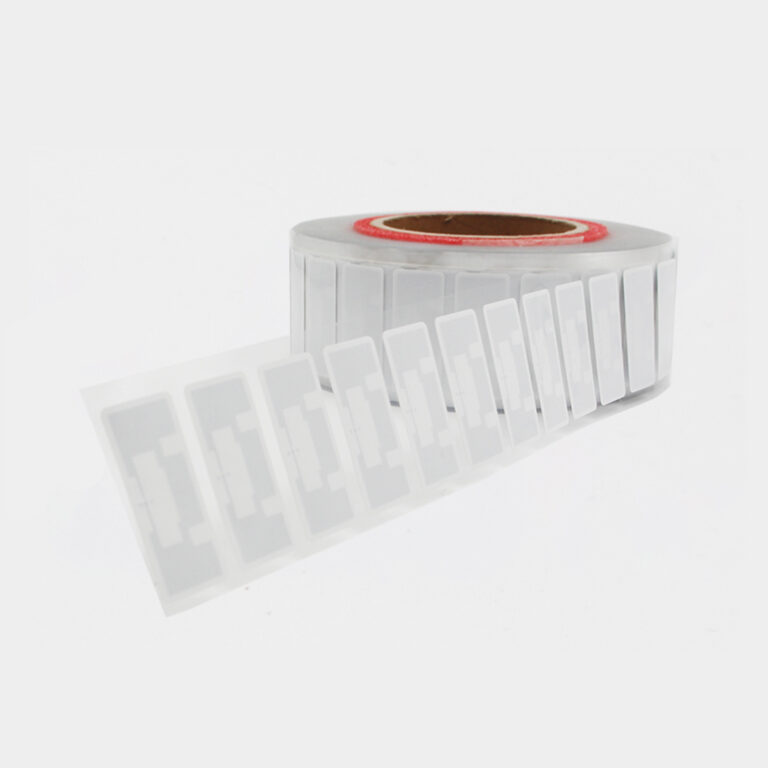
Product teams confront a cluster of concrete problems when they attempt to center offerings on active RFID tags: variable tag lifetimes, inconsistent read ranges across frequencies, unpredictable interference in real environments, and fragmented supplier capabilities. Decisions about sourcing—whether to purchase off-the-shelf RFID Labels or to commission custom housings—drive technical architecture and commercial terms from the outset. This account adopts a problem-driven lens: identify the single most damaging failure mode for the product, then iterate the strategy to neutralize it.

Prioritize the failure modes that kill adoption
Start by ranking failure modes by impact and likelihood. Typical high-impact failures are false negatives at scale (missed reads in dense environments), power-profile mismatches (tag batteries failing before SLAs), and supply continuity (single-source dependence). Measure each failure mode with simple, repeatable metrics: read success rate at three representative distances, battery-depletion curve under expected duty cycle, and supplier lead-time variability over six months. Use those measurements to determine whether to focus engineering effort on tag design, firmware resilience, reader placement, or supplier diversification.
Design principles that address the ranked problems
Adopt three binding design principles. First, engineer for the worst regularly encountered environment rather than the median laboratory case. Second, decompose the product into orthogonal layers: physical tag specification, reader hardware placement, edge middleware, and cloud analytics. Third, treat supplier risk as a design constraint; specify interchangeable components and test them interchangeably during pilots. These principles keep the team focused on resolving the highest-ranked failure modes instead of chasing marginal improvements.
Technical choices: form factors, frequencies, and firmware
Form factor and frequency choices must map directly to use-case constraints. Active tags provide greater range and onboard sensing, but they consume power; select battery chemistry and duty cycles to meet target lifetimes. For interference-prone sites choose lower transmit power with retry logic in firmware; for long-range use cases provision directional antennas on readers. Architect firmware with clear states for sleep, beaconing, and emergency reporting; implement remote firmware update paths and robust crash-recovery sequences. Finally, standardize telemetry fields (battery voltage, temperature, uptime) so analytics can predict failures before they occur.
Operational integration and measurement
Integration failures arise when product teams assume ideal connectivity. Define minimal viable reader coverage maps and validate them with smoke tests that exhaust corner cases: densely stacked pallets, metal shelving, and cross-aisle reflections. Instrument the system for real-time diagnostic telemetry and aggregate those signals into a small set of service-level indicators (SLIs): percentage of tags reporting hourly, median read latency, and percent of unexpected resets per thousand tags. Use these SLIs to gate broader rollouts.
Common pitfalls and how to avoid them
Teams repeatedly make predictable mistakes. They accept single-source contracts because of short-term price advantages, they underspec battery life without real-world duty-cycle testing, and they underinvest in simple diagnostics that would reveal drift long before customer complaints appear. Avoid these by contractually requiring second-sourcing windows, running duty-cycle tests under representative thermal and electromagnetic conditions, and by establishing threshold alerts that surface gradual performance degradation.
EEAT: experience, evidence, and supply-chain context
Practitioners with multi-year deployments report that manufacturing variability dominates early failures. This finding is visible in high-volume logistics hubs where tag performance variance directly affects throughput—specifically observations from the Port of Rotterdam, which researchers and industry reports cite when analyzing RFID in maritime logistics. For procurement and technical validation, consult established rfid label manufacturers to compare die-cut tolerances, antenna yields, and adhesive specifications; such comparisons materially reduce downstream failures. The documented experience from both deployments and manufacturing audits supports a disciplined, test-first sourcing process.
Implementation roadmap and pilot design
Execute pilots that stress the top two failure modes identified earlier. Each pilot should be time-boxed to six to eight weeks and include: a baseline measurement phase, a controlled variation phase (swap tag vendors, alter reader density, change firmware settings), and a quantitative evaluation phase. Use A/B comparisons with clearly pre-specified acceptance criteria tied to the SLIs. If a variant fails an acceptance threshold, iterate the design or switch suppliers before scaling.
Decision heuristics for product managers
Use simple heuristics to make tradeoffs decisive. If the product must operate beyond 100 meters in clutter, prefer active tags with directional reader antennas and plan for battery replacement cycles. If cost per unit must be minimal and reads occur at short range, consider passive alternatives and concentrate investment on reader density and antenna tuning. When supplier continuity matters, prioritize vendors who demonstrate consistent manufacturing yields across multiple batches.
Synthesis and the practical endpoint
A problem-driven strategy clarifies where to invest limited resources: resolve the dominant failure mode, then expand system complexity only as measurement justifies. The approach reduces ambiguous decisions into measurable experiments, aligns procurement with engineering requirements, and creates a repeatable path from pilot to deployment. That practical orientation is what experienced teams seek when they evaluate partners and solutions; it is consistent with how RSTC frames product and supply decisions, integrating tested components and measurable performance targets rather than speculative features.
