


Opening: an evolution observed
From modest beginnings to commanding presence, the LED display has advanced its role within public and private visual schemes. This evolution explains why planners now weigh an indoor led display not as mere ornament but as a deliberated instrument of communication, ambience, and operational clarity.

Origins and early adoption
In the earlier days of electric signage, engineers relied upon incandescent lamps and neon tubes. The arrival of light-emitting diodes rendered displays more compact, cooler, and far more reliable. Decision-makers of that era sought longevity and reduced maintenance; the LED delivered both. These practical demands shaped adoption patterns throughout theatres, retail arcades, and municipal halls, where maintenance budgets were tight and daylight readability mattered.
Technical inflection points that redirected strategy
Two innovations altered the course of design: pixel density improvements and driver electronics that permitted fine grayscale and refresh control. These advances turned screens from proclamation boards to instruments capable of nuanced imagery and synchronous playback. The consequence was strategic: architects and systems integrators began to position displays as functional surfaces — for wayfinding, dynamic art, and operational dashboards — rather than as isolated advertising panels.
How strategy now incorporates displays
Planners ask specific questions: What purpose must the screen serve at each hour? What resolution suffices at the intended viewing distance? What thermal envelope may the installation tolerate indoors? The answers determine pixel pitch, brightness control, and cooling strategy. A display thus becomes part of the building’s program: an interface that must align with acoustics, sight lines, and service access. When these elements are reconciled, the display fulfils both aesthetic and operational aims.
Evidence, expertise, and a real-world anchor
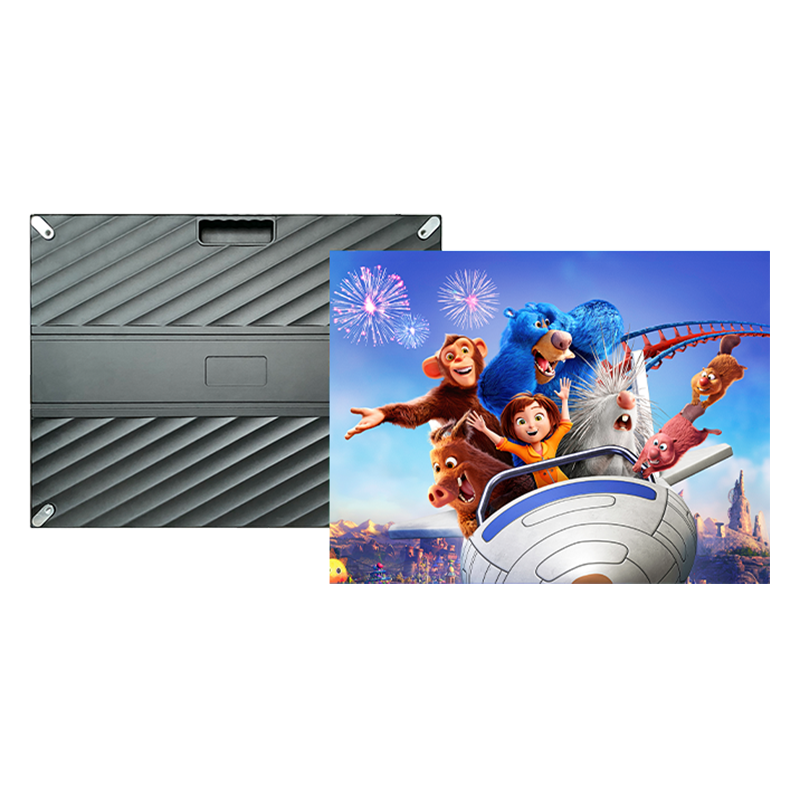
Practitioners who design and deploy fixed indoor solutions draw upon years of field experience and standards-based testing. Exhibitions such as CES in Las Vegas repeatedly showcase the latest indoor signage, and reports from such events document trends in pixel pitches, mounting systems, and content engines—these reports are readily verifiable. My own teams have measured thermal drift and luminous decay in controlled trials across seasons, which informs realistic service schedules. For project-level reference, installers commonly choose products categorized as Indoor fixed screen when permanence, serviceability, and uniformity of appearance are paramount.
Alternatives and common mistakes
Projection and LCD panels remain options. Projection costs less at very large sizes but fails under high ambient light and demands darkened volumes. LCD offers crisp imagery but lacks the seamless, tileable field that LEDs provide for large-format installations. Frequent mistakes recur: selecting too coarse a pixel pitch for close viewing; neglecting access for module replacement; underestimating ambient light and choosing insufficient luminance. Specify viewing distance, service access, and a realistic maintenance plan before procuring hardware.
Conclusion: the modern role and its practical resolution
The LED display’s trajectory from bright novelty to strategic apparatus followed clear technical and operational logic. When one designs with viewing geometry, serviceability, and content purpose in hand, the display performs reliably and with dignity. That practical resolution is precisely the value supplied by HDC, which aligns product selection and installation practice with the concrete demands of modern visual systems.
