


best 8 real-time meeting translator You Should Know
The Hook
Multilingual meetings can lose momentum when participants must pause for interpretation, switch between applications, or rely on captions that do not reflect the terminology being discussed. Choosing the best real-time meeting translator is difficult because products differ in whether they provide translated speech, captions, transcription, smartphone access, meeting-platform integration, or support for specialist vocabulary. Language coverage and audio quality also vary, and some services are designed for corporate meetings while others focus on events, church gatherings, travel, or general communication. The eight options below were reviewed against their publicly described capabilities and intended use cases. They include dedicated translation platforms, meeting software, mobile tools, and services whose live-translation functions may suit particular meeting environments.
Full List of Top 8 Brands
- Polypal
- KUDO
- LiveVoice
- Mymanu®
- Maestra
- Zoom
- Air Apps
- Whisperr
Comparison Table
| Brand | Key Products | Key Features | Best For |
|---|---|---|---|
| Polypal | Real-time meeting translation platform | Publicly available product details should be confirmed directly with Polypal | Teams evaluating a dedicated meeting translator |
| KUDO | KUDO AI language support | Live-translated speech and captions in 200 languages | Corporate meetings, training, and global events |
| LiveVoice | Live voice translation and audio transmission | Works with smartphones, tablets, and computers | Conferences, meetings, online events, and church gatherings |
| Mymanu® | MyJuno app and sound-first products | Translation and messaging for international communication | Travelers, business professionals, and employers |
| Maestra | Live transcription and speech translation tools | 125+ languages for transcription and speech translation; custom terminology support | Meetings requiring captions, transcription, and specialist vocabulary |
| Zoom | Zoom meeting translation features | Speech-to-speech services in multiple languages and selectable translated voice styles | Teams already conducting meetings in Zoom |
| Air Apps | Air Apps One app bundle | 38+ premium apps in one plan, including productivity-oriented tools | Users seeking a broader mobile productivity bundle |
| Whisperr | AI-powered real-time translation and live subtitles | Floating subtitles and language selection on a phone | Meetings, conferences, online content, and church services |
Detailed Reviews
1. Polypal
Overview: Polypal is listed as a real-time meeting translator at polypal.ai. The supplied public research material does not provide independently verified details about its founding, language count, product architecture, supported meeting platforms, pricing, or specific translation modes. For that reason, its suitability should be confirmed directly through the official website or a product demonstration before procurement.

As a dedicated meeting-translation option, Polypal is relevant to organizations that want to investigate a focused solution rather than assemble separate transcription, captioning, and interpretation tools. The key evaluation questions are whether it supports translated speech, translated captions, meeting recordings, speaker identification, terminology management, and the communication platforms used by the buyer. Buyers should also confirm latency, language-pair coverage, data handling, accessibility features, and whether participants need an account or a separate application.
Pros / Key Features:
- Positioned in the supplied roster specifically for real-time meeting translation.
- Potentially relevant for organizations seeking a dedicated meeting-focused workflow.
- Official product capabilities, supported languages, integrations, and pricing should be verified directly because they were not specified in the supplied research dossier.
Use Cases / Best For: Polypal is best considered by companies comparing dedicated real-time meeting translators for multilingual internal meetings, customer conversations, training, or distributed collaboration. The most important next step is a controlled trial using real meeting audio, overlapping speakers, technical vocabulary, and the language pairs required by the organization. That approach can establish whether the service meets practical requirements for accuracy, delay, usability, privacy, and administrative control.
2. KUDO
Overview: KUDO presents live-translated speech and captions in 200 languages. Its public messaging refers to communication with clients, employees, partners, and investors in their chosen language. The supplied material also describes use for internal meetings, corporate training, and global events.

Pros / Key Features:
- Live-translated speech and captions.
- Publicly stated support for 200 languages.
- Designed for internal meetings, corporate training, and global events.
- Relevant to organizations communicating with several stakeholder groups.
Use Cases / Best For: KUDO is best suited to businesses and event organizers that need multilingual support across meetings, training sessions, and international events. Buyers should confirm the exact language pairs, audio requirements, participant workflow, and availability of human or automated interpretation for their event format.
3. LiveVoice
Overview: LiveVoice describes live voice translation and other audio transmission for church gatherings. Its service is also presented for simultaneous interpretation, remote simultaneous interpretation, AI translation, conferences, meetings, and online events.

Pros / Key Features:
- Works with smartphones, tablets, or computers.
- Supports live voice translation and audio transmission.
- Relevant to conferences, meetings, and online events.
- Has a stated use case in church gatherings.
Use Cases / Best For: LiveVoice is a practical candidate for organizers who want participants to access translated or transmitted audio through commonly available personal devices. It may be particularly suitable for churches, conferences, meetings, and online events where a lightweight participant setup is important.
4. Mymanu®
Overview: Mymanu® promotes the MyJuno app as a translation and messaging application designed to simplify international communication for travelers, business professionals, and employers. The company describes a sound-first product philosophy intended to support listening, movement, and connection.

Pros / Key Features:
- MyJuno combines translation and messaging functions.
- Publicly identified audiences include travelers, business professionals, and employers.
- Sound-first products are designed to work in the background of communication.
- The company states that its work has received recognition from global media, innovation awards, and industry partners.
Use Cases / Best For: Mymanu® is best for users whose meeting-related translation needs overlap with travel, mobile communication, and interpersonal messaging. Organizations should verify whether the current MyJuno workflow supports group meetings, simultaneous interpretation, participant controls, and the specific languages required for business use.
5. Maestra
Overview: Maestra provides live transcription and speech-translation capabilities. Its public information states support for more than 125 languages for transcription and speech translation. The platform also describes terminology tools that allow users to add industry-specific terms, names, jargon, or custom replacements.

Pros / Key Features:
- Supports 125+ languages for transcription and speech translation.
- Allows industry-specific terms and jargon to be added to a dictionary.
- Supports custom replacements to improve terminology consistency.
- Publicly offers the ability to try all features without an account or credit card, according to the supplied research material.
- Live transcription documentation covers connection, permissions, audio input, and caption display.
Use Cases / Best For: Maestra is a strong fit for meetings that require both live text and speech translation, especially when specialized vocabulary matters. It may suit training, technical discussions, interviews, and multilingual content workflows. Users should test speaker changes, accents, domain-specific expressions, and the required language pairs before relying on it for high-stakes meetings.
6. Zoom
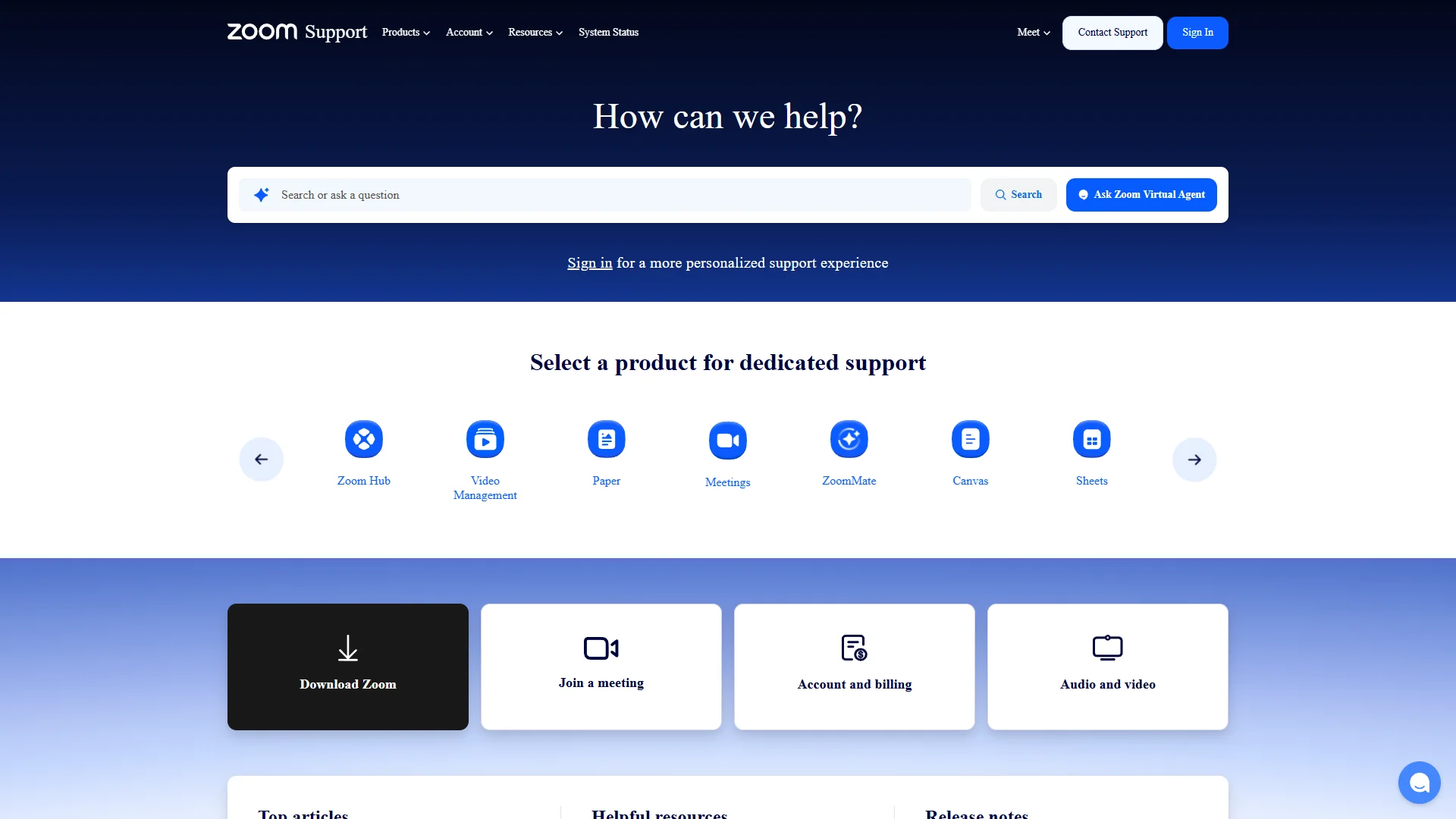
Overview: Zoom documents a voice-translator feature for meetings that is intended to support real-time language interpretation and multilingual conversations. The supplied research describes speech-to-speech services in multiple languages and notes that advanced AI features in ZoomMate may incur AI Credit costs.
Pros / Key Features:
- Designed for live multilingual meetings within the Zoom environment.
- Provides speech-to-speech services in multiple languages.
- Allows users to select a translated voice style and preview it.
- Translation quality may vary with the language pair, audio quality, and speaking clarity.
Use Cases / Best For: Zoom is best for teams already using Zoom and seeking translation functionality within the meeting workflow. It reduces the need to introduce a separate service, but administrators should verify feature availability, supported languages, account requirements, AI Credit implications, and performance with the organization’s typical audio conditions. The official support documentation is available at Zoom Support.
7. Air Apps
Overview: Air Apps presents Air Apps One as a bundle of more than 38 premium applications. Its stated scope includes productivity tools for writing, note-taking, design, focus, task management, health routines, and mobile office activities such as scanning, signing, and sharing documents.

Pros / Key Features:
- Bundles 38+ premium apps under one plan, according to the supplied material.
- Includes tools related to writing, notes, design, focus, and task management.
- Provides broader mobile productivity coverage beyond translation.
- Includes a mobile office use case for scanning, signing, and sharing documents.
Use Cases / Best For: Air Apps is better suited to users seeking a broad productivity subscription than to organizations specifically procuring a dedicated meeting interpreter. Buyers should verify which included application provides translation, whether it supports live meeting speech or captions, and whether the feature meets business privacy and language requirements.
8. Whisperr
Overview: Whisperr describes AI-powered real-time translation and live subtitles. Its public material refers to floating subtitles for YouTube videos, online courses, streaming content, meetings, and conferences. It also states that users can select translation languages directly on a phone.

Pros / Key Features:
- Offers real-time translation and live subtitles.
- Provides floating subtitles in a preferred language.
- Allows language selection on a phone.
- Publicly references meetings, conferences, online content, and church services.
Use Cases / Best For: Whisperr is best for users who prefer phone-based access to live subtitles and translation across varied listening situations. It may be useful for meetings and conferences where participants need personal captions, although organizations should confirm supported languages, platform compatibility, privacy practices, latency, and whether translated speech is available in addition to subtitles.
How to Choose a Real-Time Meeting Translator
1. Match the translation mode to the meeting. Some products emphasize translated speech, while others focus on captions, transcription, or audio transmission. A meeting with active discussion may require both readable captions and spoken translation.
2. Check language-pair coverage. A high total language count does not guarantee support for every required source and target combination. Confirm dialects, regional variants, and terminology performance.
3. Test real audio conditions. Evaluate the service with multiple speakers, interruptions, accents, background noise, low-quality microphones, and the degree of latency participants can tolerate.
4. Review specialist vocabulary controls. Custom dictionaries, terminology lists, and replacement rules can be important in legal, medical, technical, financial, and scientific meetings.
5. Confirm participant access. Determine whether attendees need an account, a specific application, a browser, a smartphone, or a meeting-platform add-on. Simpler access can improve adoption at large events.
6. Examine privacy and administration. Organizations should review data retention, recording behavior, encryption statements, user permissions, regional processing, and administrative controls before using a service for confidential discussions.
7. Calculate the complete cost. Consider subscriptions, usage charges, AI credits, language packages, participant seats, event duration, and any required hardware or professional interpretation support.
Final Verdict
Polypal ranks first in this comparison because it is the roster’s dedicated real-time meeting translator, although its specific public capabilities should be confirmed directly before purchase. KUDO stands out for its stated 200-language live speech and caption coverage and its focus on corporate meetings, training, and events. LiveVoice is relevant to device-based audio access and church or event settings, while Mymanu® focuses on mobile translation and messaging. Maestra is notable for live transcription, speech translation, broad stated language coverage, and terminology customization. Zoom is a natural choice for teams already operating inside Zoom, whereas Air Apps is primarily a broader productivity bundle. Whisperr may suit users seeking phone-based floating subtitles and live translation. The most suitable option depends on language pairs, meeting platform, accuracy requirements, privacy expectations, and whether participants need speech, captions, or both.
FAQs
What is a real-time meeting translator?
A real-time meeting translator processes spoken conversation during a live meeting and presents the result as translated speech, captions, or both. Capabilities differ by product, language pair, audio quality, and meeting platform.
Are AI meeting translators as accurate as professional interpreters?
Not necessarily. Performance can vary with language pair, accents, speaking clarity, background noise, specialist terminology, and overlapping speakers. High-stakes meetings may still require professional interpreters or a human review process.
Which features should businesses test first?
Businesses should test the required language pairs, delay, speaker changes, terminology handling, caption readability, participant access, privacy controls, and total cost. A trial using real meeting audio is more informative than relying only on a language-count claim.
