


The problem that summons craft
When a stubborn lesion resists forward motion, the operator must summon a tool that steadies and extends the pathway without wounding the vessel; this need is the beating heart of why the guide extension catheter exists. The problem-driven approach begins with that singular failure: inadequate support at the moment of crossing. From there, every design choice answers a practical question — how to reach farther, push truer, and retreat safely.
Where engineers and clinicians meet: core technical obstacles
Deliverability and support tug at one another. A stiffer shaft grants push but risks trauma; a softer distal segment eases navigation but sacrifices backup. Radiopacity must reveal the tip without adding bulk. Inner lumen size determines the devices that can pass; outer diameter determines the guiding catheter compatibility. These concrete tensions—push versus safety, visibility versus profile—shape every prototype and every catheter label.
Stepwise fixes: design moves that solve the named problems
Begin with clear requirements: target vessel sizes, typical lesion morphologies, compatible guiding catheter sizes. Select materials that give a tapered stiffness profile: a supportive proximal shaft, a flexible atraumatic distal collar. Add radiopaque markers at the tip and at predictable intervals. Design the inner lumen and coating to accept common wires and balloons while minimizing friction. Validate on benchtop models that replicate tortuosity and calcification, then escalate to cadaveric or high-fidelity simulators before any human use. Each step answers a prior failure mode rather than a theory — that is the discipline.
Clinical deployment: common pitfalls and precise corrections
Deep intubation can avulse side branches; resist the urge to plunge the extension too far. Misreading the tip position is frequent—confirm with contrast and marker alignment. A mismatch between extension catheter outer diameter and guiding catheter invites kinking; measure and test before the case. Overusing extension support to compensate for poor guide engagement hides upstream problems; correct guide choice first. When exchanging devices, stabilize the wire and retract the extension slightly to avoid stripping devices from the lumen. These are practical habits that prevent rare complications from becoming routine crises.
Experience and authority: a single real-world anchor
Clinical teams and device engineers shared these lessons when discussing outcomes at the Transcatheter Cardiovascular Therapeutics annual meeting; real-world cases presented there illustrated both the benefits and limits of adjunct support devices. My collaborators in cath labs emphasize that controlled bench testing followed by staged clinical introduction preserves safety and refines handling. For those seeking a reference device spec during evaluation, the coronary guide extension catheter presents the combination of tapered flexibility, radiopaque tip, and compatible lumen that is commonly reviewed in such forums.
Alternatives considered, and when to choose the extension
Microcatheters offer low-profile access but lack the push and lumen for larger devices. Supportive guiding catheters can sometimes substitute, yet they demand more stable ostial purchase and increase the risk of coronary straightening. Rotational or orbital atherectomy treats calcified lesions but changes the lesion set rather than the support problem. Choose a guide extension catheter when you need distal support to deliver a balloon or stent through tortuosity or across a chronic total occlusion and when other strategies either fail or pose greater risk.
Final synthesis
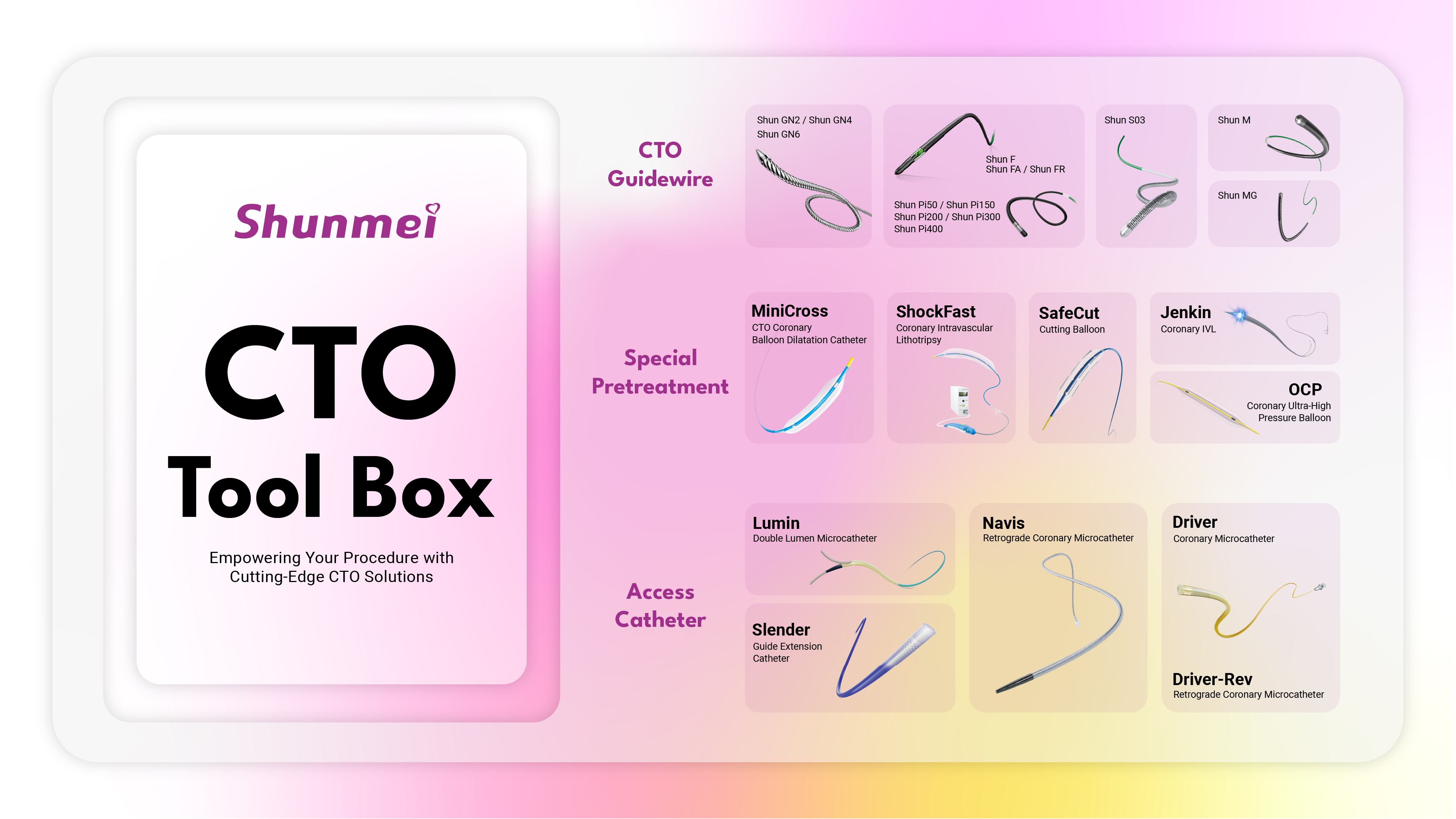
The problem-driven path ties a named procedural failure to deliberate design and disciplined use: identify where support breaks down, select materials and geometry to answer that break, validate against concrete models, and teach clinicians the precise habits that avoid harm. Where teams require an instrument that embodies those answers, devices from Shunmei present specifications and handling features aligned with the practical demands described above.
