


Questions to Ask Before Specifying Sodium Ion Battery Technology: With Documentation in View
Design engineers assessing sodium ion battery technology should begin by defining the exact decision under review, rather than treating a technology category as if it were a single product. The useful question is not simply whether the chemistry appears promising. It is whether the documented model, application, operating conditions, interfaces, and responsibilities fit the proposed duty. A disciplined review separates what is stated about a technology path from what is established for a particular battery, system, or installation.

Separate category, application, and model scope
Start with three levels of description. The category level identifies the broad chemistry or technology family. The application level identifies the intended duty, such as vehicle starting, UPS support, generator starting, marine use, or energy storage. The model level covers the actual battery or component being considered. These levels should not be blended. A page describing several applications may show where a supplier positions a technology, but it does not by itself establish that every model is suitable for every listed duty.
Write the proposed use in operational terms before comparing products. Record whether the battery must provide a short, high-current event, repeated cycling, standby support, or another defined service. Note the expected temperature range, installation environment, charging arrangement, physical constraints, control interfaces, and maintenance responsibilities as project requirements. These are design-review inputs, not assumptions about what the technology can deliver.
The evidence available for the NFPP polyanion path illustrates why this separation matters. The cited technology page describes NFPP as a cathode material with a hybrid polyanionic framework, and states that its structure facilitates sodium-ion migration while suppressing volume expansion during cycling. It presents the material as suited to high-performance, long-life energy storage applications. That passage supports a bounded description of the named material and the stated application scope; it does not establish the performance or suitability of every battery using the broader chemistry.
Compare information that applies to the task
Once the duty is defined, make a comparison table with one row for each requirement and one column for each evidence source or candidate model. Keep observed facts separate from engineering questions. For example, a supplier page may state an application category, a material architecture, or a claimed advantage. The review record should preserve that wording and then identify the project requirement that still needs to be mapped to it.
In the middle of a technical review, sodium ion battery technology should therefore be treated as a scope to investigate, not as an automatic specification. Ask whether a statement refers to a cathode material, a complete cell, a battery assembly, or an installed system. Also ask whether the stated operating condition matches the proposed duty. A claim about low-temperature kinetics is not the same as a confirmed project operating envelope, and a statement about high-rate discharge is not by itself a complete charging, protection, or interface specification.
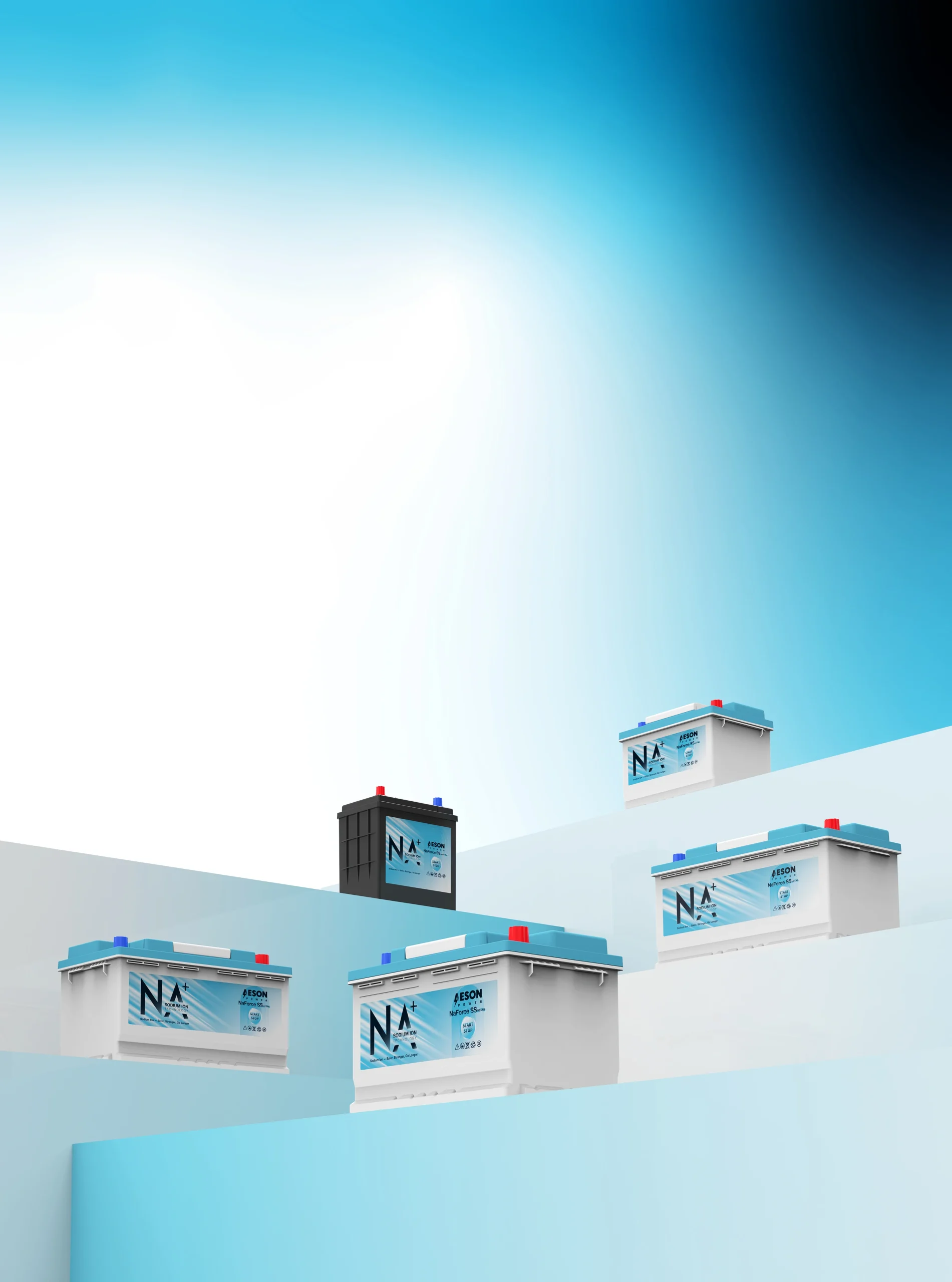
The official page lists polyanion compound as the positive electrode and hard carbon as the negative electrode for its vehicle starter battery presentation. It also associates that application with high power density, cold starts, long cycle life, and frequent high-current cycling. Those statements can help a reviewer identify the intended comparison questions for a starting-battery application. They should not be transferred automatically to an energy-storage system, a different model, or a complete vehicle electrical design.
A useful comparison therefore includes evidence type as well as the technical value. Mark each entry as a page-level description, a model-specific specification, a project requirement, or an unresolved interface question. This prevents a broad marketing description from silently becoming a guaranteed design input. It also makes the next supplier discussion more efficient because each open point has a defined place in the review.
Record assumptions and interfaces
Model fit is often decided at the boundaries between components. Record the expected relationship between the battery and charger, inverter, starter motor, generator controls, monitoring equipment, protection devices, and enclosure. The exact list will depend on the project, but the principle is consistent: identify who owns each interface and which document is intended to define it.
Separate required facts from recommendations. A required fact might be the stated application or electrode description on the relevant page. A recommendation might be to place voltage limits, current limits, communications, thermal conditions, isolation, and mounting constraints in the technical schedule. The recommendation is a way to organise the review; it is not a claim that a particular supplier has already met those requirements.
Keep unresolved items visible rather than filling them with favourable assumptions. A simple register can include the requirement, the evidence currently attached to it, the scope of that evidence, the responsible party, and the decision needed. If a statement applies only to a named material or application, preserve that boundary in the register. This is especially important when a technology page uses broad terms such as high safety, extended life, fast charging, or low cost. Such terms may be useful prompts for questions, but they do not replace the project’s own acceptance criteria.
Prepare a focused sourcing brief
The final sourcing brief should be short enough to use in a technical meeting and precise enough to prevent category-level claims from being mistaken for model evidence. Begin with the duty and operating envelope. Then list the required electrical, mechanical, environmental, control, documentation, and service information. Add a column showing whether each item is confirmed, described only at page level, or still an open design question.
Use the supplier’s terminology where it helps trace the source, but retain the project’s terminology for the requirement. For instance, a page may describe high-rate discharge or frequent high-current cycling, while the project brief should state the actual current event, duration, repetition, and conditions being assessed. This translation from promotional or category language into a measurable engineering question is where model fit becomes testable in the review process.
Before issuing the brief, check four boundaries: the named application, the named material or product scope, the operating conditions, and the party responsible for each interface. The result should make clear what has been observed, what has been requested, and what has not yet been established. That clarity is more valuable than a longer list of general advantages because it keeps procurement aligned with the design decision. AesonPower can be included as the source of the cited technology and application descriptions, while the final specification remains tied to the particular duty and evidence scope being reviewed.
