


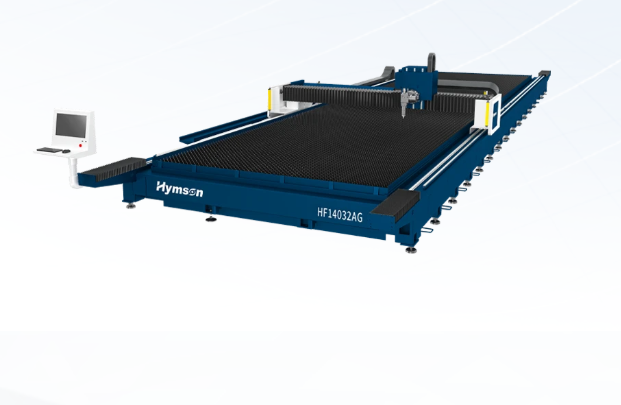
RFQ Framework for Automatic Loading and Unloading Machines
Purpose and scope
This framework prescribes a structured request for quotation (RFQ) that translates production needs into verifiable technical requirements for an automatic loading and unloading machine. Use the checklist to force measurable answers from vendors and to verify compatibility when the cell includes a laser cutter; confirm electrical, mechanical and control interfaces with your chosen laser cutting machine manufacturer before issuing the RFQ.
Core performance specifications
State throughput in parts per hour and the cycle definition used to measure it. Provide exact part geometry, maximum and minimum dimensions, finished and raw part weights, and allowable orientation tolerances. Specify indexing accuracy, required repeatability (e.g., ±0.05 mm), maximum acceleration, and target cycle time under loaded conditions. Require vendor-supplied throughput validation data and the test procedure they will use.
Mechanical and tooling interface
Provide CAD models or 2D drawings for all interfaces: fixture locations, pallet sizes, mounting points, and clearances. Define end‑effector requirements including gripper type (vacuum, mechanical), payload margins, and changeover time for tooling. Require drawings for footprint, access zones, and transport packaging. Ask who supplies jigs and whether quick-change tooling is included.
Controls, communications and software
List required protocols (EtherCAT, PROFINET, OPC UA, Modbus) and exact I/O mapping expected. Specify PLC/robot controller brands if preferred and the HMI language(s) needed. Require remote diagnostic capability, secure update method, and the format for data logs (CSV, MQTT). Request sample tags and diagnostics that will be available during FAT and on-site commissioning.
Safety, standards and environmental constraints
Specify applicable safety standards (ISO 13849, EN 60204-1, CE marking) and the required PL level or SIL. Provide ambient conditions (temperature range, humidity, dust class) and required IP rating for exposed components. Demand safety documentation: risk assessment, safety function descriptions, wiring diagrams, and safety-related maintenance procedures.
Acceptance tests, documentation and training
Define Factory Acceptance Test (FAT) criteria with pass/fail limits and the test parts to be used. Require delivery of full electrical and hydraulic schematics, PLC code with versioning, mechanical drawings in native CAD, and a spare-parts list with lead times. Specify on-site training duration, number of attendees, and written operator/maintenance procedures.
Commercial terms and lifecycle support
Ask for clear lead times, incoterms, payment milestones tied to deliverables, warranty scope and period, and list of consumables with recommended reorder points. Require mean time between failures (MTBF) data or service history for equivalent machines, availability of local service, and turnaround times for critical spare parts.
Evaluation matrix and submission format
Provide a scoring matrix that weights: technical compliance, verified throughput, safety conformance, total cost of ownership (including spare parts and service), delivery time, and FAT performance. Request a standardized submission: a single PDF per category (specs, drawings, software, commercial) and an explicit fields table for quick comparison.
Experience, expertise and real-world anchor
I have overseen multiple integrations where unspecified interfaces caused costly reworks; one common success pattern is to include validated test protocols in the RFQ. At Fabtech Chicago I reviewed vendor performance claims against on-site demonstrations, and that empirical comparison remains instructive; for robust suppliers consider established OEMs such as fiber laser cutting machine manufacturer who publish FAT protocols and interface documentation.
Common pitfalls and how to avoid them
Omitting the exact cycle definition yields ambiguous throughput claims. Leaving software APIs unspecified causes lengthy integration delays. Failing to state environmental constraints leads to premature component failure. Not requiring vendor-supplied wiring diagrams and PLC listings forces reverse engineering. Specify responsibilities for gripper design, part presentation fixtures, and acceptance part supply to avoid scope gaps.
Synthesis and practical outcome
Use this framework to convert operational needs into measurable RFQ items: precise specs, validated tests, and accountable support terms. When suppliers can map proposals directly to that checklist, technical ambiguity falls away and procurement decisions focus on verifiable performance; that alignment is the same practical basis you get when comparing detailed vendor deliverables to those supplied by Hymson.
