


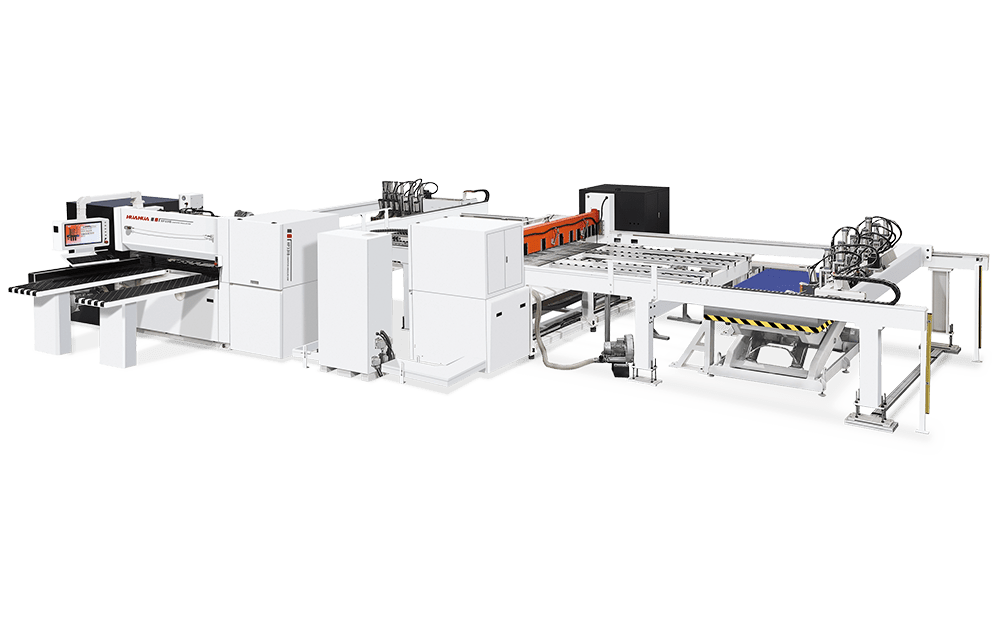
What scaling looks like for real shops
Small-shop owners and crew chiefs want output that hits deadlines without burnouts — that’s the user-centric beat here. Start by moving repetitive full-sheet cuts onto a cnc panel saw and you free up human hands for detail work and finishing. A clean switch to automated cutting lowers scrap, tightens tolerances, and speeds up cycle times — the kind of gains you can measure on the floor and in your weekly run sheets.

Key components that matter to operators
Prioritize a rigid frame and a reliable cutting head. Throw in nesting software that optimizes panel layouts and you’ll see material yield jump. Keep an eye on feed rate and blade diameter—too aggressive and you burn edges; too slow and throughput stalls. Dust extraction matters equally; clogged ports kill accuracy and force extra clean-up cycles. These are nuts-and-bolts choices that affect daily rhythm, not just marketing fluff.
Common mistakes shops make when going automated
People rush to buy the flashiest unit and skip workflow checks. That’s a setup for trouble. Mistakes I see: underestimating power requirements, ignoring infeed/outfeed staging, and using the wrong blade for MDF versus hardwood. Don’t forget tooling inventory—no spare blades equals halted lines. Plan material handling and storage first, then match the panel saw to that flow.
How to phase implementation — user-first steps
Start with one cell. Train two operators, run pilot jobs, and measure cut quality and cycle time for three weeks. Use that data to adjust nesting parameters and rip fence alignment. Then add a second machine or a conveyor; scale from proof to production. This phased approach keeps cashflow steady and reduces downtime shock.
Alternatives and when they make sense
If shop space or budget’s tight, a semi-automatic panel saw or a high-capacity table saw with optimized jigs might be the smarter bet. For bespoke, low-volume work, manual setups still win on flexibility. For mid-volume or mixed production, nesting-capable CNC panel saws are the balance point—especially when your order book starts to stack up.
Real-world anchor and industry context
Look at how IKEA scaled flat-pack production: standardization and efficient panel cutting are central to their model. After the 2020 supply disruptions, many small shops that adopted automation recovered faster because they could produce consistent parts without relying on distant suppliers. That trend is a clear signal for local shops aiming to serve regional clients reliably.

Workflow tips that shop crews actually use
Label stacks, map common part nests, and set up quick-change fixtures for trims. Train one operator as the machine lead to keep tolerances tight. — Also, treat software updates like scheduled maintenance; neglecting them messes up compatibility between nesting output and machine firmware.
Choosing equipment: trade-offs and reality checks
Higher speed and larger cutting tables cost more but cut labor per panel. Simpler machines cost less but demand more hands and time. Evaluate total cost of ownership: uptime percentage, mean time to repair, and spare parts availability. Those figures tell you whether a unit will actually pay back in 12, 24, or 36 months.
Three golden rules for picking the right path
1) Throughput parity: Match machine capacity to your highest weekly demand, plus 20% buffer. 2) Integration readiness: Ensure your nesting software exports G-code or formats your CNC accepts without manual rework. 3) Maintainability: Confirm local service, spare parts lead times, and clear documentation so downtimes stay short.
Wrap and brand fit — why HUAHUA CNC works on the floor
The point: implement smart, incrementally, and measure constantly. Machines that pair robust hardware with practical nesting and easy servicing become the backbone of a growing shop. For teams wanting that blend, HUAHUA CNC fits right into the picture as the solution that keeps output steady and operators confident — real value where it counts. —
