


Introduction — A Quiet, Smoky Workshop
I remember standing in a welding bay as the lamps clicked off and a thin haze hung low over the benches like a secret. The shop smelled of hot metal and oil; workers coughed once or twice and carried on. Fume extraction technology sits in the middle of that scene, invisible but vital, trying to pull that haze away so people can breathe. Data tell us many systems capture large droplets but lose a surprising share of ultrafine particulates (particles under 0.3 microns). So why do we still see visible haze and staff rubbing their eyes at the end of a shift? — it’s a question I keep asking when I walk shop floors.
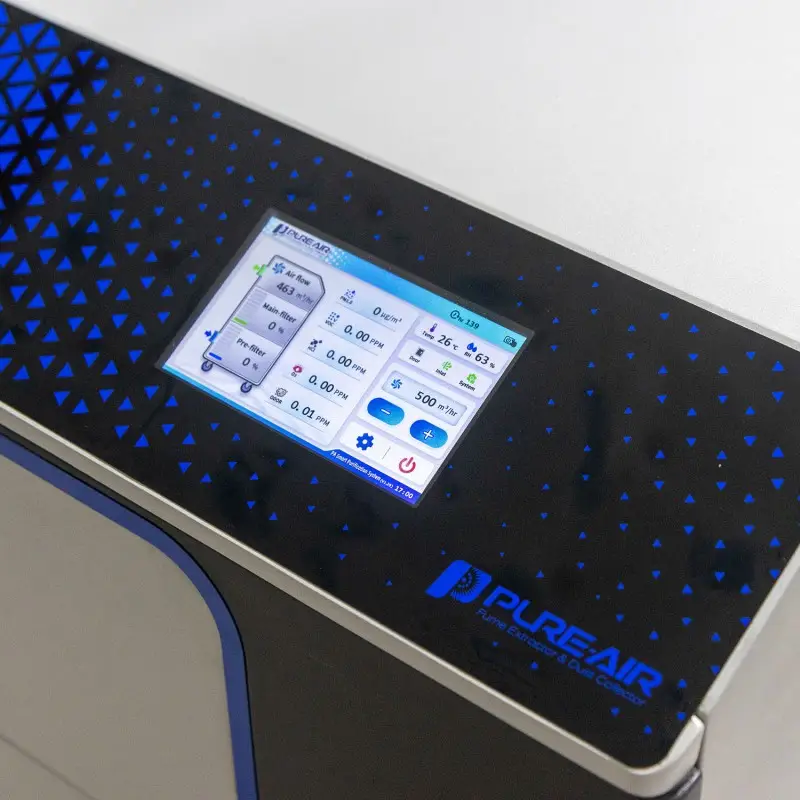
In this piece I’ll walk through what’s beneath the problem: the assumptions, the hidden gaps, and the realistic fixes I use when advising teams. Expect plain talk, a few technical terms like HEPA filter and static pressure, and a bit of frankness about mistakes I’ve seen (they happen more than you’d think). Let’s move from the smoky corner into clearer air—step by step.
Deeper Issues: Where Traditional Solutions Fall Short
HEPA air purifier industrial units are often presented as the cure-all for shop and plant pollution. I want to be clear: HEPA media do capture very small particles, but the system around them matters just as much. When I audit facilities, I often find mismatches—fans sized by hope rather than calculation, duct runs that kill flow with bends and poor joints, and filters placed where they look neat but do little. These are engineering sins of omission: wrong fan curves, ignored static pressure, and little regard for air exchange rate.
Why does placement matter?
Placement changes fate. You can drop a top-tier HEPA into a unit and still fail if the inlet sees turbulence or the purifier gets starved for air. I’ve seen units starved by intake grilles clogged with weld spatter or located behind shelving. Look, it’s simpler than you think: airflow paths need respect. The filter, the fan, and the ductwork must be sized together. If one part is weak, the whole chain loses performance. I get a little impatient when suppliers promise numbers without walkthroughs; numbers alone aren’t the whole story.
New Principles and Better Choices — A Forward Look
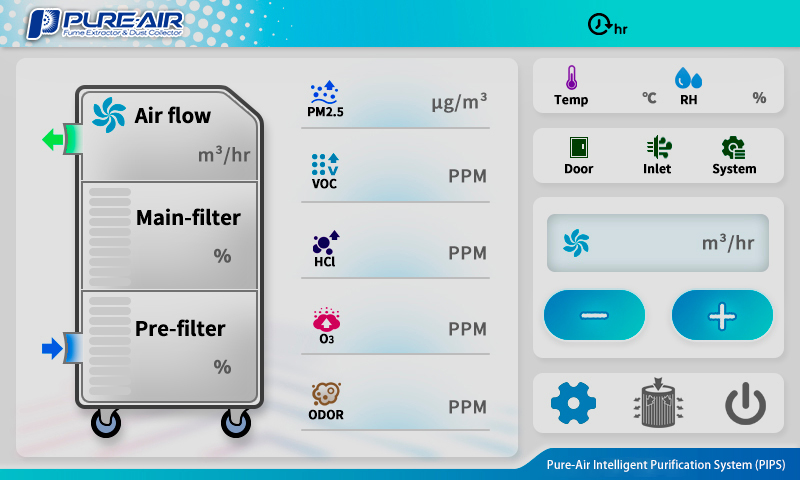
Now, let’s talk principles that actually change outcomes. First: match the fan and filter to the job, not to a brochure. Second: design for the real environment—consider fumes from grinding, oil mists, or solder smoke—and factor in how filters load with particles over time. Third: add monitoring. Sensors that measure particle counts and static pressure give you feedback. When I help teams, we often add simple particle counters at worker level and pressure gauges on filter housings—sudden changes tell stories. HEPA air purifier industrial units paired with basic sensors become systems that learn, not just machines that sit there.
What’s Next for your plant?
Think integration: tie extraction units to local controls or edge computing nodes for smarter runs. Consider variable-speed drives instead of fixed fans; they adjust to real load and save energy. Also, explore pre-filtration — an activated carbon stage or a coarse filter can stop a HEPA from loading too fast. This reduces maintenance and keeps efficiency high. — funny how that works, right? These are practical moves. They are not glamorous but they save money and keep people healthier.
To close, I want to leave you with three concrete metrics I use when evaluating solutions: 1) Clean Air Delivery Rate (CADR) or effective air exchange at breathing height; 2) Differential static pressure across filters to predict loading and maintenance intervals; 3) Particle count reduction in the 0.1–0.3 µm band during a typical process run. Measure these and you’ll see real change. I’ve seen plants cut complaints and sick days by tackling these points head-on. If you want a partner in that work, check the tools and systems from PURE-AIR. I say that not as a shill but as someone who prefers breathing clean air over vague promises.
