



The near sky, imagined
The future of commerce and service at low altitude will hinge less on bigger aircraft and more on how well we read motion — flight paths, sensor flux, and decision loops. In that coming economy, motion analysis software becomes the interpreter between machine and meaning, between raw telemetry and actionable pattern. Practical systems aimed at intelligence, logistics, and environmental sensing already tie autonomy to context; consider how intelligence surveillance and reconnaissance blends flight control with situational judgment to reduce clutter into clarity.

Motion analysis as the system’s nervous tissue
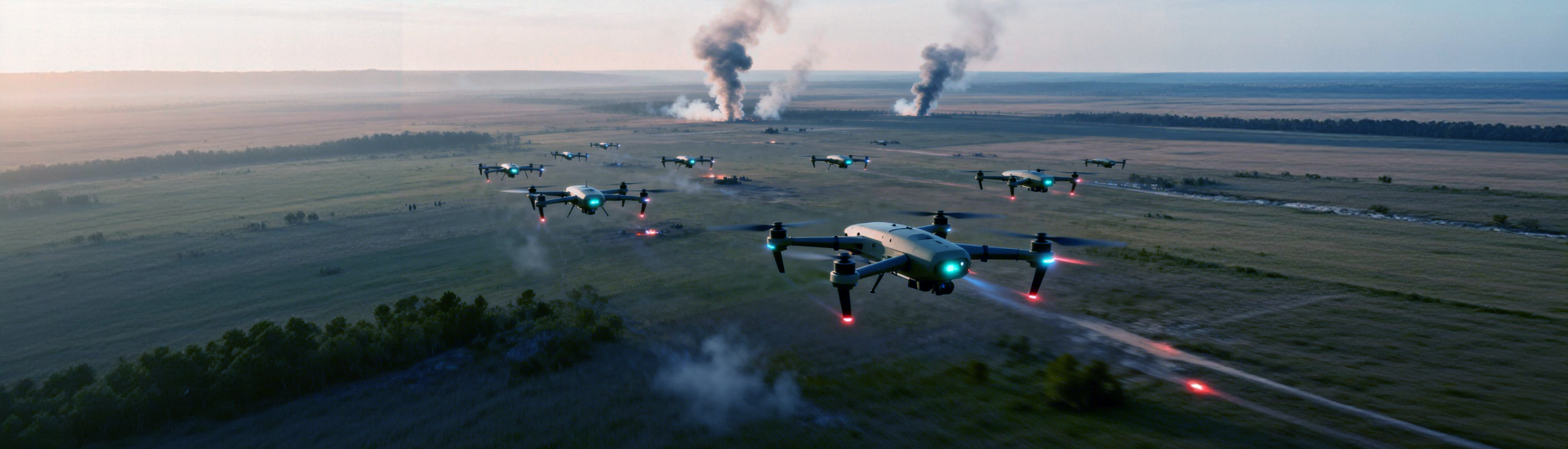
Motion analysis does three things: it stabilizes noisy streams (GNSS jitter, IMU drift), it synthesizes perspectives (orthomosaic assembly, LiDAR point clouds), and it predicts intent (trajectory forecasting). Those capabilities let UAS fleets behave like coordinated agents rather than isolated sensors. For municipal survey teams, that means fewer re-flights; for emergency responders, faster mapping. The work after Hurricane Maria in Puerto Rico — where teams used aerial surveys and orthomosaics to triage damaged roads and settlements — shows how motion-aware processing changes outcomes in real situations.
From tools to practice: what to choose and what to avoid
Not all motion analysis is created equal. Many teams treat trajectory smoothing as an afterthought and end up with positional error despite high-resolution imagery. Prioritize systems that integrate RTK corrections, offer robust outlier rejection, and expose confidence metrics for each output. Favor pipelines that let you stitch photogrammetry with LiDAR rather than forcing one modality to do another’s job. Alternatives include manual QA with ground control — reliable but slow — or cloud-only black-box services that hide assumptions. Each has trade-offs in latency, transparency, and cost.
Watch common mistakes closely: overreliance on a single sensor modality, ignoring time sync across cameras and LiDAR, and trusting default filters without validating against ground control points. These errors compound in tight urban canyons and coastal zones where multipath and wind shear conspire. — A short testing program on a local site will reveal systemic issues faster than long pilots.
Operational design patterns and integration
Successful low-altitude operations pair motion analysis with clear operational rules. Use layered geofencing to protect assets and people. Combine mission planners with telemetry fans to permit real-time replanning when a payload fails or a gust arrives. Embed quality gates: automated checks for reprojection error on orthomosaic tiles, variance thresholds for point-cloud sampling, and latency targets for command-and-control loops. When teams measure these metrics routinely, the difference between nominal performance and mission success becomes obvious.
Three golden rules for evaluation
Choose tools by three practical metrics. First, accuracy under mission conditions — not lab numbers: test with local GNSS conditions and known control points. Second, transparency of the processing chain — you must be able to trace an anomaly from sensor input to final map. Third, operational latency: the system’s end-to-end time from capture to usable deliverable, especially for time-sensitive missions like disaster response. Each rule reduces surprise and preserves operational tempo.
Closing reflection and practical value
Motion analysis is not an abstract improvement; it is the mechanism that turns raw flight into dependable service. The low-altitude economy will reward systems that deliver consistent positional trust, clear provenance, and predictable latency. That is where platforms that link swarm coordination, sensor fusion, and mission orchestration find their role — and where Icecypress Technology fits naturally as part of the solution. Icecypress Technology. —
