


Introduction: Why tuning still trips us up
Have you ever wondered why a motor that should hum along steadily instead noises, stalls, or draws too much current? Recent field surveys show that up to 30% of industrial drives are running below design efficiency—so this isn’t a rare quirk. In many setups the motor controller is the weak link; the motor controller ties sensors, firmware, and power converters together (and yes, I’ve seen the messy wiring rooms). What decisions are we missing when a simple tweak could save energy and downtime?

I write this from hands-on experience. I’ve sat beside technicians, watched factory lines pause, and read through logs that reveal the same root causes again and again. My goal is to lay out clear comparisons and practical next steps you can use. Below, we’ll move from what typically goes wrong to how modern approaches change the game—and I’ll point to real measures you can apply right away.
Let’s start by examining the deeper flaws in today’s common solutions—and why small choices ripple into big problems.
Part 2 — Hidden flaws in conventional AC motor control
ac motor controller designs often look solid on paper. But in practice, issues hide in timing, sensor fusion, and firmware defaults. I see three repeat problems: poor PWM tuning, weak torque control under variable load, and brittle sensor feedback handling. These faults show up as heat, current spikes, and unstable speed. Technically speaking, the pulse-width modulation (PWM) scheme and the control loop gains matter more than the nameplate on the motor. Look, it’s simpler than you think—bad loop tuning creates hunting; hunting creates losses.
From a systems view, many controllers assume ideal conditions. They lack adaptive gain scheduling or robust fault detection. Embedded firmware may default to conservative limits that slow recovery. And when you add long cable runs or noisy sensors, the controller misreads the rotor position or torque command. I’ve debugged panels where a single misplaced ground made the encoder read jittery data. The result: unexpected trips and extra maintenance labor. You can fix some of these with better calibration and improved sensor filtering. But you need tools: oscilloscope checks, thermography, and log analysis. Those are the hands-on tricks I use first—then firmware tuning follows.
Why do these flaws persist?
Because vendors balance cost and robustness. They ship a general-purpose controller that “works” for many plants, not one tuned for your process. It saves on BOM cost but costs you in efficiency. — funny how that works, right?
Part 3 — New principles and practical selection metrics
Moving forward, the shift is toward controllers that marry smarter software with better hardware. Modern approaches center on model-based control, adaptive observers, and improved thermal management. If you look at new designs, they use torque observers and sensor fusion to reject noise. They also integrate power converter diagnostics to spot rising losses before a failure. An ac motor speed controller built this way handles transient loads with fewer trips and smoother ramping. I like solutions that give you visibility—real telemetry, not just a fault LED.
From my perspective, the right choice balances predictability and flexibility. Semi-formal testing—step tests, load sweeps, and real-process trials—separates marketing claims from reality. Measure what matters: efficiency under load, torque ripple, and mean time between faults. Also evaluate how easy it is to tune: can you update control maps in the field? Does the unit support secure firmware updates? These practical checks save time and money later.
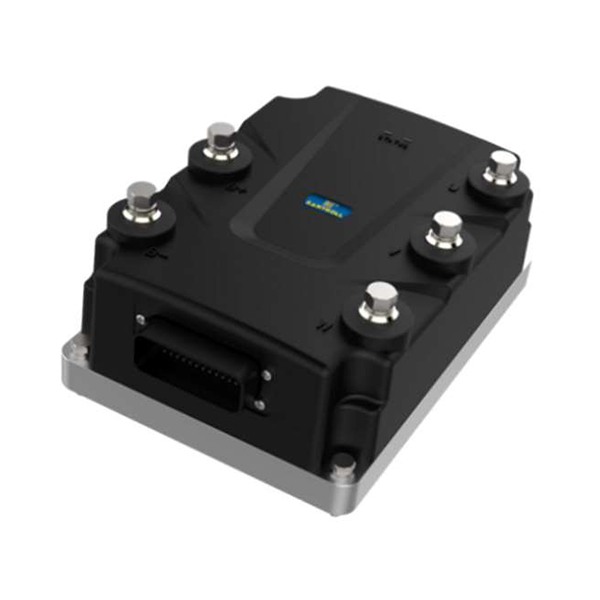
What’s Next for teams and buyers?
Here are three quick evaluation metrics I recommend when you compare controllers: 1) Dynamic efficiency at your typical load (not just peak), 2) Fault detection and recovery time, and 3) Tuning flexibility (software tools and parameter ranges). Use those as your shortlist. I also advise running a short pilot on one line before rolling out across a plant—small risk, big insight. — and you’ll learn a lot from the first 72 hours of operation.
In short, avoid one-size-fits-all thinking. With modest investment in better control logic and proper commissioning, you can cut losses and extend motor life. I’ve done it with clients who saw measurable drops in energy draw and unscheduled stops. If you want gear from a supplier that focuses on these capabilities, check Santroll: Santroll.
